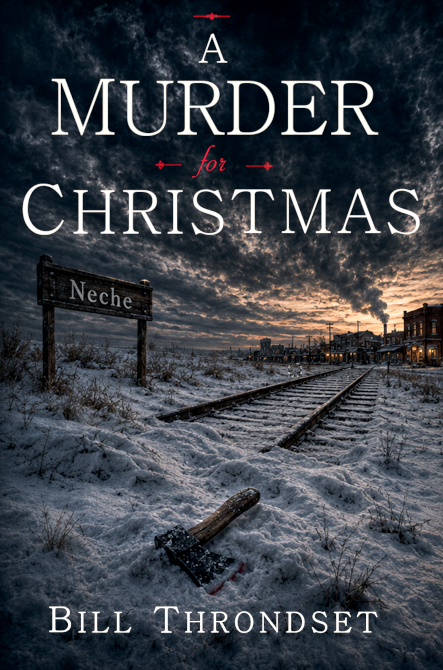
Bill Throndset was a boy in the summer of 1976, staying with his grandparents in the tiny North Dakota town of Neche barely a mile from the Canadian border, when he wandered into the town cemetery and a gravestone stopped him cold. It gave the 1889 birth date of one Arthur LeClair, but it didn’t list the date he died.
Instead, it said he was “MURDERED.” LeClair was only 18 years old.
Throndset's grandmother had newspaper clippings, yellowed and brittle after nearly 70 years, that described the brutal Christmas-time killing, the investigation by law enforcement and a Pinkerton detective, and the guilty plea and sentencing of LeClair’s friend.
It was a tale that stuck with Throndset. Half a century later he has turned the tragedy that rocked a prairie village into a compelling account of a small community coming to grips with the killing of a promising young man, not at the hands of a stranger but by one of their own.
Before going any further, I should say that Bill Throndset is a friend of mine, and so were his late parents. Bill and I both grew up in Grand Forks, North Dakota, about 80 miles south of Neche. But if I didn’t think Bill’s book was well worth your time, I’d just keep my mouth shut and my computer shut down. “A Murder for Christmas” is a very good book, a fictionalized account of true murder in a small town. A warm tale of a chilling crime in a freezing North Dakota Christmas.
Those newspaper clippings Throndset’s grandmother dug out of a box in her basement in 1976, clippings she’d inherited from her mother, lay the groundwork for his novel.
But the dialogue he invents is convincing, in conversations between LeClair and his killer, between the victim’s father and the father of the murderer, and between residents and the Pinkerton detective who proves what so many Neche residents suspect.
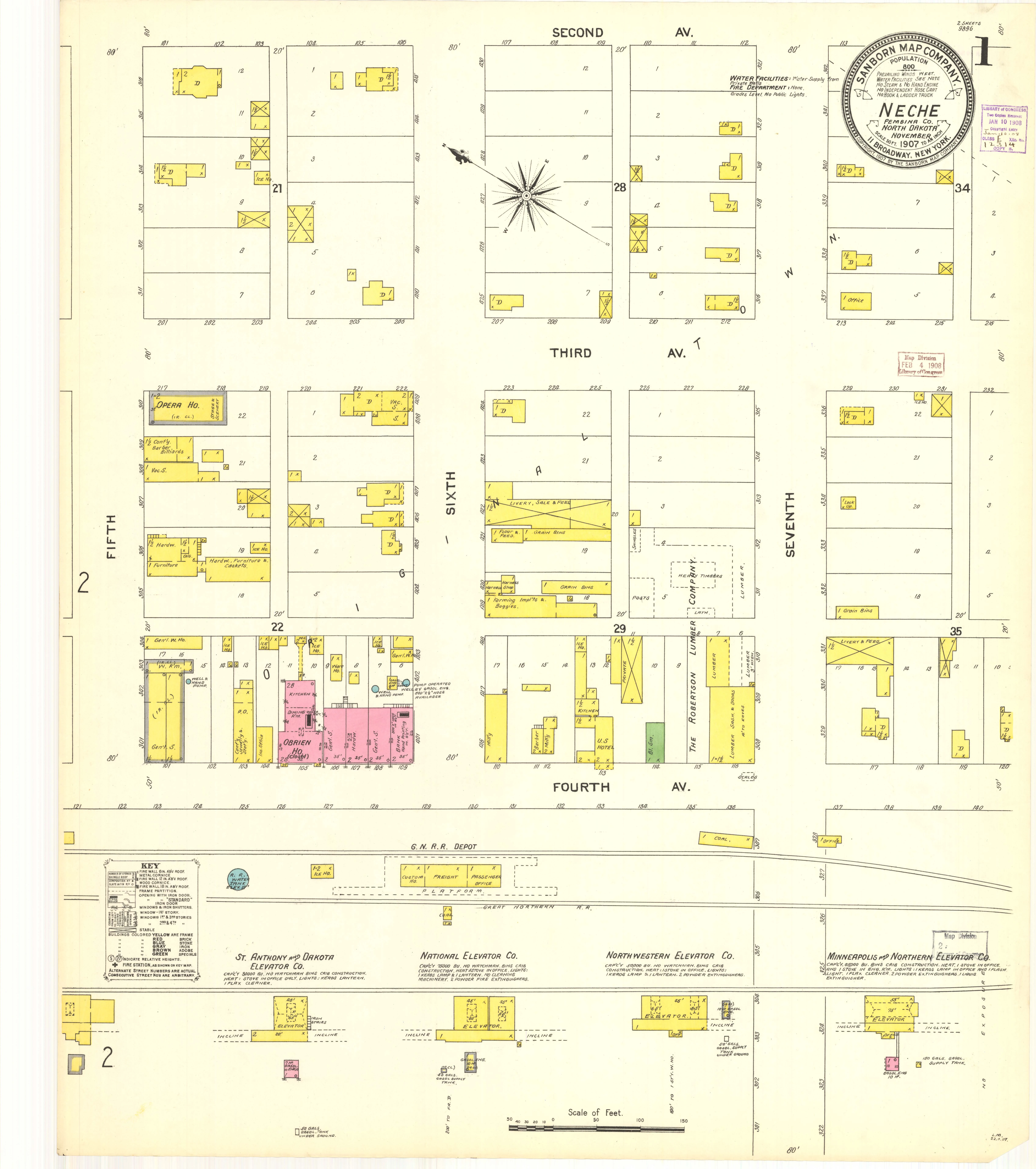
Neche, circa 1907, becomes real too, as Throndset tenderly describes the hopeful community near the Canadian border.
Residents in those days enjoyed ready access by train to bigger North Dakota towns and cities and all the way down to St. Paul, Minnesota. The railroad, which employed Arthur LeClair, gave the community reason to believe in a prosperous future.
Money was scarce in Neche in 1907, though. (For example, the clerk at the general store cannot make change when the killer tries to pay for a $20 purchase with a stolen $50 bill.) For that reason, many residents hunted or grew their own food, sewed their own clothes, and chopped their own wood to heat their homes.
And they must have chopped a lot of it; one of the strongest impressions a reader gets from “A Murder for Christmas” is that it’s very, very cold in North Dakota at Christmas time. (Bill and I can both swear to that, as well.)
In fact, Throndset’s roots in North Dakota’s Red River Valley reveal themselves in passage after passage. “The light of a December morning in this part of the Valley was not really light at all, but the absence of full dark,” he writes, describing a confrontation in a barn.
We can be grateful to Throndset’s great-grandmother for saving those clippings nearly 120 years ago. He has turned a forgotten crime in an obscure village into a powerful tale of community trauma and survival.
“Arthur LeClair was a real person,” Throndset writes in a concluding author’s note. “I have tried to honor him.”
And you’ve succeeded, Bill.
John Vanvig, Writer and editor
John Vanvig wrote and edited news and feature stories for print magazines and news outlets for almost 50 years before retiring as a free-lance writer and editor. A former reporter for the Grand Forks (North Dakota) Herald, he also served briefly as press secretary to former Senator Kent Conrad of North Dakota. He now lives in Vancouver, Washington.
I first encountered the story of Arthur LeClair as a boy in Neche, North Dakota, when I found his gravestone and asked my grandmother about it. She was a local historian, and she showed me old newspaper accounts of the murder. I never forgot the case.
Years later, I returned to those fragments of local history and began imagining the people, the winter, the town, and the questions that still seemed to linger around the story.
About the book
In December 1907, a killing on the northern prairie set a small community on edge. Suspicion moved fast. Certainty moved faster.
But in a world of winter wind and ice, pioneer farm families, newspaper accusations, and courtroom pressure, the truth was harder to see — and easier to bury.
A Murder for Christmas follows the investigation, suspicion, and trial surrounding the death of Arthur LeClair, bringing to life the people caught in the machinery of justice: grieving families, meticulous lawyers, frightened witnesses, and the unlikely investigator whose work would change the case.
Set against the stark beauty and hardship of early twentieth-century North Dakota, the novel explores guilt, memory, prejudice, faith, and the dangerous comfort of believing the first story that seems to fit.
SettingNeche and Pembina County, North Dakota, 1907.
For readers ofPrairie history, legal mysteries, and morally grounded crime fiction.
1907 Sanborn Map of Neche
This public domain Sanborn fire insurance map shows Neche, North Dakota, in 1907, the year of the Arthur LeClair case. It offers a glimpse of the streets, rail line, businesses, elevators, and downtown blocks that shaped the world of the novel.
Sanborn Map Company, Neche, Pembina County, North Dakota, 1907. Public domain.Open full-size map
Historical Newspaper Accounts
The novel draws on early newspaper accounts, local history, and court reporting surrounding the Arthur LeClair case. These original scans are included for readers interested in the historical record; some contain period language and assumptions from the time.